FULL-LENGTH CHINESE DRAMA REVIEW
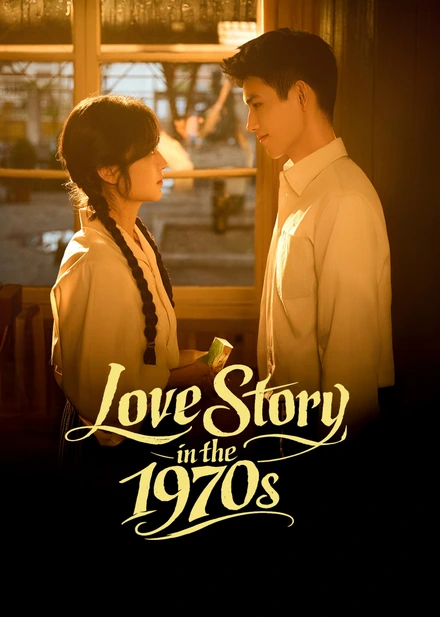
Love Story in the 1970s / 纯真年代的爱情
Chinese title纯真年代的爱情
2026 · 29 Episodes · Full-Length Chinese Drama · Period / Romance / Drama
Arthur Chen / Chen Feiyu as Fang Muyang · Sun Qian as Fei Ni
Main Couple: Fang Muyang × Fei Ni
THE ROMANCE CHECK
Quick Answers
Relationship spoilers below.
- Does Love Story in the 1970s have a happy ending?
- Yes. Fang Muyang and Fei Ni remain married and together; both gain university admission in Episode 29.
- Do Fang Muyang and Fei Ni break up?
- No actual breakup. Discovery of their original arrangement causes family conflict, but their real relationship remains intact.
- Is there a long separation?
- No prolonged romantic separation. A brief geographic separation around Episodes 21–23 involves earthquake rescue/reporting danger.
- When do they get married?
- They legally marry in Episode 9, initially as a practical housing arrangement.
- When does the romance become mutual?
- Around Episode 17: both admit their feelings and share their first real kiss.
- How much kissing is there?
- Moderate/restrained. Emotional chemistry, domestic affection and devotion provide most of the romantic payoff.
- What is their final relationship status?
- Married and together. Happy Ending.
- Where can I watch it?
- WeTV / Tencent Video; the official English listing advertises English subtitles and all 29 episodes.
RELATIONSHIP MILESTONES
❤️ Relationship Timeline
Spoilers for all 29 episodes. Legal marriage and mutual love are distinct milestones; the disaster-related geographic separation is not a breakup.
-
School years
School years
Fang Muyang falls for Fei Ni first.
-
Episodes 1–3
Episodes 1–3
They reunite after his serious injury; Fei Ni helps care for him during his amnesia.
-
Around Episode 7
Around Episode 7
Fei Ni proposes a practical marriage largely because of their housing situation.
-
Episode 9
Episode 9
They legally marry. 💍
-
Episodes 10–16
Episodes 10–16
Domestic life gradually turns the arrangement into genuine love.
-
Around Episode 15
Around Episode 15
Strong romantic/almost-kiss tension.
-
Episode 17
Episode 17
He confesses his long-term feelings; she admits hers; first real kiss and explicit mutual romantic commitment. ❤️
-
Episodes 21–23
Episodes 21–23
Brief earthquake/disaster-related geographic separation. No actual breakup.
-
Episode 29
Episode 29
They both take the restored Gaokao and enter university: Fei Ni studies Chinese Language and Literature; Fang Muyang studies Art. Married · Together · Happy Ending.
Final couple outcome
Happy Ending — Married and Together. No actual breakup; brief disaster-related geographic separation.
💗 Shen Zhiyi’s Drama Reality Check
Finished · 29 episodes. Full ending and relationship spoilers below.
- 💕 Romance
- StrongMarriage-before-love slow burn with substantial relationship development.
- 🔥 Chemistry
- StrongEmotional and domestic chemistry.
- 💋 Kissing
- Moderate / restrainedFirst real kiss around Episode 17.
- 🤗 Skinship
- ModerateMore domestic affection than constant physical intimacy.
- 🌶️ Spiciness / Adult Intimacy
- LowRestrained adult intimacy.
- 🚩 ML Red Flag
- LowSupportive and devoted rather than controlling.
- 👑 Female Lead Competence
- HighPractical, hardworking and determined about her education.
- ⏱️ Romance Timing
- Marriage Episode 9; mutual love Episode 17Legal marriage precedes mutual romantic commitment and first real kiss.
- ❤️🔥 Relationship Payoff
- StrongSubstantial married-life development and happy ending.
- 💔 Breakup
- NoneNo actual breakup.
- ⏳ Separation / Conflict
- Brief geographic separationEarthquake/disaster danger around Episodes 21–23; not a romantic breakup.
- 💍 Final Relationship Status
- Married and TogetherClear Happy Ending.
- 📖 Plot
- StrongWork, education, housing and social conditions shape the relationship.
- 🐾 Animal Harm
- No dog/cat harm identifiedBased on the research used for this review; not an exhaustive absence guarantee.
About these assessments
My impressions cover what I watched. Later research is labeled on dropped reviews. Kissing, affection and adult intimacy are separate; coercion does not count as romantic spice. Being apart does not automatically mean a breakup.
A PERSONAL VIEWING JOURNAL
My Review
First of all, my husband is here. 😂❤️
Arthur Chen as Fang Muyang was already a very good reason for me to watch this, but thankfully the drama itself was actually worth watching too.
I really loved the story, and the acting was one of the biggest reasons this worked for me.
This isn't a flashy modern romance where everybody has unlimited money and an apartment the size of a shopping mall. These people are worrying about factory jobs, housing, ration coupons, school recommendations, furniture, money, and whether a married couple can even get a room of their own. 😭
And somehow all of those ordinary problems make the romance better.
Fei Ni desperately wants to attend university. After her former classmate Fang Muyang is seriously injured, she helps care for him while hoping her good deed might improve her chances of getting a university recommendation.
Life, naturally, decides to make everything complicated.
Eventually their housing situation becomes such a problem that Fei Ni comes up with the very practical solution of marrying Fang Muyang.
For the house. 😂
The problem with her practical little arrangement is that Fang Muyang has basically loved her forever.
So while Fei Ni is thinking about housing allocation, this man is internally thinking:
WIFE. FINALLY. 😭❤️
They legally marry around Episode 9, but the relationship gradually changes from a practical arrangement into a real marriage.
Fang Muyang ❤️
Fang Muyang is exactly the kind of male lead I like.
He's playful, capable, protective, supportive, stubborn when necessary, and extremely devoted without trying to control Fei Ni.
Most importantly, her dream of attending university never becomes something he expects her to sacrifice for him.
He supports her education, helps with her work and designs, fixes things, earns money, encourages her when she feels defeated, and genuinely wants her to succeed.
When her designs are destroyed, he even helps reconstruct and redraw them.
Sir.
Husband.
Literally and figuratively. 😂❤️
Fei Ni
Fei Ni feels like an actual person instead of a heroine created entirely to fall in love with the male lead.
She's ambitious, practical, family-oriented and constantly aware of money because money genuinely matters in her world.
Her university dream exists independently of Fang Muyang and drives a huge part of the story.
Sun Qian did a great job with the quieter emotional moments, and she and Arthur Chen made the domestic scenes feel natural.
The acting from both leads was excellent.
Romance & Chemistry ❤️🔥
The romance is a slow burn, but thankfully they don't wait until the finale to remember this is supposed to be a love story. 😂
Fang Muyang falls first and has loved Fei Ni since their school days.
They legally marry around Episode 9, although the marriage begins as a practical arrangement.
Their daily life together gradually turns that arrangement into something real.
Around Episode 17, everything finally comes into the open. When Fei Ni's family discovers the original marriage arrangement and divorce gets mentioned, Fang Muyang makes it very clear that he has no intention of leaving her.
He admits that he has loved her for years. Fei Ni finally admits her own feelings too.
Episode 17 gives us their first real kiss and their clear mutual romantic commitment. ❤️
The chemistry is strong, especially emotionally, but this is not a super kiss-heavy drama. The physical romance is more restrained than some of my favorites.
Most of the payoff comes from devotion, flirting, domestic intimacy, married-life moments and the way these two keep showing up for each other.
Breakup / Separation
💚 No actual breakup.
This is important.
The original marriage begins as an arrangement, and discovering that agreement causes family conflict, but Fang Muyang and Fei Ni do not actually break up once their relationship becomes real.
There is a brief danger-related geographic separation around Episodes 21–23 when Fang Muyang goes into an earthquake disaster area for rescue/reporting work.
Fei Ni becomes worried when communication stops and eventually goes looking for him.
That is:
- NOT a breakup
- NOT emotional withdrawal
- NOT a relationship separation
- It is a temporary geographic/danger-related separation.
Thank you, drama. We did not need the late-series “I'm leaving you for your own good” disease. 🙄😂
Ending — 💚 HAPPY ENDING
Yes, the main couple absolutely ends up together.
Fei Ni's old university-recommendation path eventually falls apart, but the restoration of the national college entrance examination gives her another chance.
Fang Muyang takes the Gaokao with her.
They both succeed:
- Fei Ni enters Chinese Language and Literature
- Fang Muyang enters Art
Their family celebrates, and the drama closes with Fang Muyang and Fei Ni moving into the next stage of their lives together.
There is:
- No breakup
- No fake death
- No tragic ending
- No ambiguous ending
- No long finale separation
- No reincarnation nonsense 😂
Main couple together? YES. Still married? YES. Romantic payoff before the finale? YES.
Exactly how I like it. 😌❤️
Final Thoughts
4/5 ⭐⭐⭐⭐
I really enjoyed this one.
I loved the story, the acting was excellent, and of course Arthur Chen being my husband did not hurt matters whatsoever. 😂❤️
But what really makes Love Story in the 1970s work is that the relationship feels like two people actually building a marriage.
They're dealing with money, jobs, education, housing, family expectations and adulthood together instead of spending thirty episodes breaking up over nonsense.
It is slower and less physically romantic than some of my favorite C-dramas, but Fang Muyang's devotion, Fei Ni's determination, the marriage-before-love setup, the strong performances and the satisfying ending made this an easy 4/5 for me. ✨
🔎 Historical Reality Check
The historical framework behind Fei Ni’s education and housing problems is grounded in real conditions of the period. During the Cultural Revolution, the normal national university entrance examination system was suspended, and admissions relied heavily on worker-peasant-soldier recommendations.
China restored the Gaokao in 1977. This major finale development is historically accurate. Work-unit housing, rationed goods and scarcity in urban life are historically plausible, too.
The drama presents the era through a relatively warm, romance-focused lens. It is not a complete depiction of life during the late Cultural Revolution and immediate post-Mao transition.
Peking University — restored 1977 Gaokao · Cambridge — education, work units and distribution · Oxford — urban grain rationing
U.S. Availability / Where to Watch
Official WeTV / Tencent Video English listing advertises all 29 episodes and English subtitles. U.S. geo-playback, complete subtitle quality/coverage, original Mandarin audio and A/V quality were not independently tested.
Sources / Viewing Scope
I finished all 29 episodes. The links below support the series information and historical comparison.
- Official WeTV: 2026, Mainland China, 29 episodes, cast and synopsis; English subtitles advertised
- Peking University — The Story of PKU and Gaokao: to Be Continued
- Cambridge University Press — A Social History of Maoist China: classifications, social hierarchies and distribution
- Oxford Academic — Feeding China: The Experience since 1949